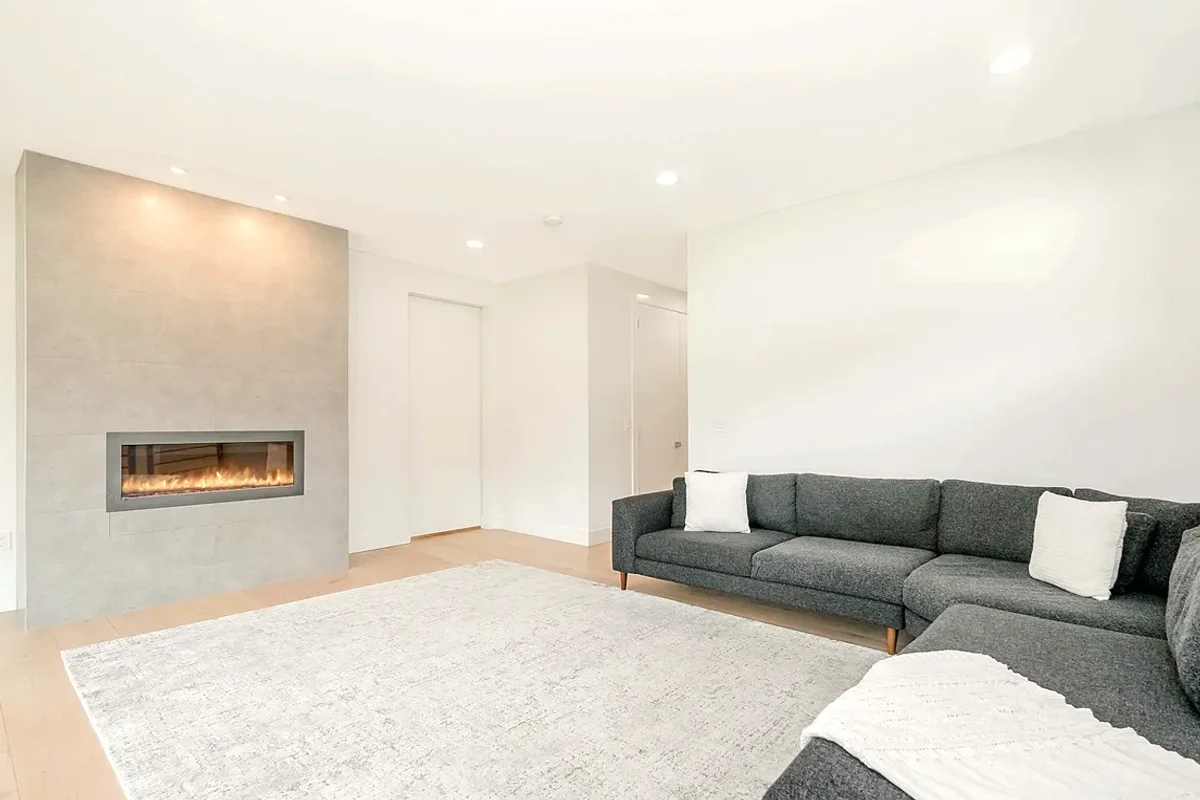
Request fireplace installation for a property in Ajax. Include the equipment, the problem or planned work, and your location so the request can be reviewed.
What needs to be checked before choosing a fireplace for an existing opening?
A fireplace installation begins with the appliance type and the space where it is proposed, since gas, electric, and wood-burning models have different connection and venting requirements. The assessment should identify the supporting surface, clearances to nearby materials, route for any vent or chimney connection, and required electrical or fuel connections. Where an existing opening is being reused, its dimensions and condition help determine whether the selected appliance fits the opening and what alterations may be needed.
Assessment can record the appliance model, opening dimensions, clearances, hearth or support requirements, and the condition and route of any vent or chimney. For gas models, the proposed fuel connection and vent configuration affect scope; electric models have different electrical requirements. For wood-burning models, the chimney and vent path need evaluation. These checks determine whether the opening can be reused or altered.
Gas, electric, and wood-burning appliance connection differences.
Opening dimensions, clearances, hearth or support, and surrounding construction.
Venting, chimney, firebox, and masonry condition.
Assessment and Scope
Questions for the Proposed Work
01
Match installation requirements to the fireplace type
A gas fireplace requires a compatible fuel connection and a vent arrangement specified for its model. An electric unit has different electrical and clearance requirements, while a wood-burning appliance depends on a suitable chimney and vent path. Identifying the exact appliance before work is planned matters because requirements are not interchangeable. The model documentation and site measurements establish which connections and construction details belong in the installation.
02
Check the opening, clearances, and supporting surface
Measurements of the opening and nearby walls, trim, flooring, and mantel help determine whether the appliance can be installed in the proposed position. The supporting surface and any required hearth protection also depend on the model. If an existing opening or surround is being retained, its dimensions and visible condition can reveal whether modifications are needed before the appliance is fitted.
03
Inspect the vent route and existing fireplace condition
Where venting or a chimney is required, its route and condition are part of the installation decision, not a finishing detail. Deteriorated vent sections, damage to the firebox, or damaged surrounding masonry may require separate work before installation proceeds. These findings should be distinguished from appliance-component faults, since a pilot or ignition issue on an existing gas unit is a repair question rather than an installation specification.
Compare the next step
Find out whether the existing installation can be inspected with the current surround in place. Ask what records are needed to identify the appliance and vent system, which controls are supported, and what work would be required before substituting a different model in the same opening.
Use a qualified contractor for the chosen appliance and any fuel, venting, or electrical work. Do not alter the appliance or defeat its controls. Confirm its manufacturer operating requirements before relying on it for whole-home or outage heating.