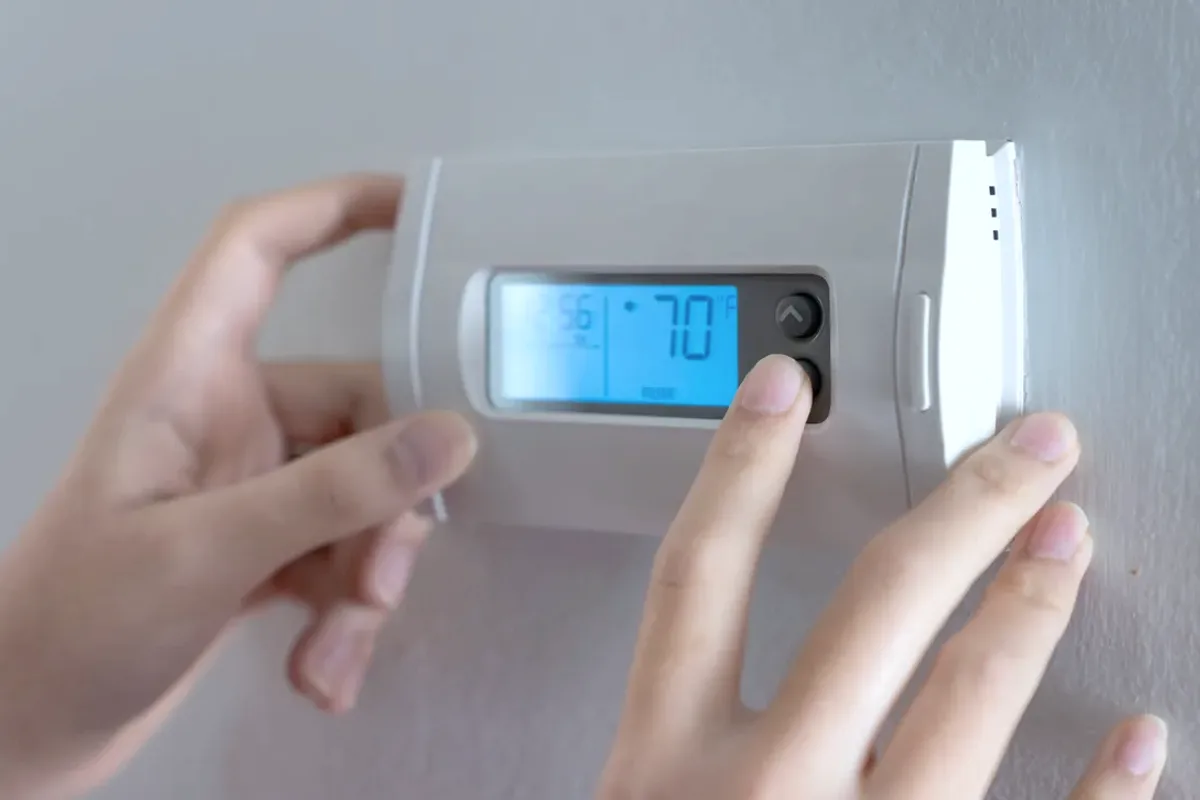
Request thermostat repair & replacement for a property in Ajax. Include the equipment, the problem or planned work, and your location so the request can be reviewed.
How can you determine whether a thermostat needs repair or replacement?
A thermostat that will not turn on, displays an unexpected temperature, or causes frequent system calls may have a sensor, wiring, power, configuration, or control fault. Diagnosis should distinguish a thermostat problem from an issue elsewhere in the heating or cooling system. Replacement requires more than matching a display: the new control must be compatible with the equipment, wiring, and any existing zones or operating modes, including heat pump functions where present.
Assessment can compare the displayed temperature with a suitable measurement, check the control's power and signals, inspect wiring, and review the HVAC equipment and existing configuration. For replacement, system type, available conductors, zones, and required heating or cooling modes determine compatibility. These observations help distinguish a failed control from a wiring or equipment issue and avoid selecting a thermostat that cannot operate the connected system.
Thermostat temperature readings, power, wiring, and control signals.
Compatibility with furnaces, air conditioners, heat pumps, and zones.
Repair-versus-replacement decisions and programmable or connected controls.
Assessment and Scope
Questions for the Proposed Work
01
Separate a thermostat fault from an equipment fault
A blank display, inaccurate reading, or repeated call for heating or cooling can originate in the thermostat, its power or wiring, or the equipment responding to it. Checking the control signal against the system's operation helps identify where the fault lies. This distinction matters because replacing a thermostat will not resolve a separate equipment or control-circuit problem, while adjusting settings cannot correct a failed component.
02
Confirm compatibility before choosing a replacement
A replacement control must suit the connected furnace, air conditioner, or heat pump and support the system's required operating modes. Existing wiring, zone controls, and any equipment-specific control requirements can limit the available choices. For a heat pump, heating, cooling, and auxiliary functions must be considered. Reviewing the equipment model and wiring configuration before selection helps define whether additional control changes are part of the work.
03
Choose repair or replacement from inspection findings
Repair may be appropriate when a specific sensor, connection, or configuration problem is identified and the existing thermostat remains compatible. Replacement may be more appropriate when the control is failing, unavailable, or unsuitable for the system's requirements. Programmable or connected features are optional considerations, not a remedy for every comfort issue. The condition of the control circuit and the intended functions should guide the decision.
Compare the next step
Identify all existing schedules, remote accounts, and sensors before replacing the control. Ask who owns the app account and whether an offline operating mode is available. Have the equipment response demonstrated at handover so the new owner can distinguish a normal control sequence from a fault.
Thermostat wiring is not universal. Do not connect wires by colour alone or work on energized wiring; a compatible control must be configured for the equipment it serves.